Bonn, 05/12/2024
Monthly global fire locations and Fire Radiative Power from January to November 2024 from the CAMS Global Fire Assimilation System (GFAS), based on MODIS satellite observations. Source: CAMS/ECMWF
The regular monitoring of wildfire emissions carried out by theCopernicus Atmosphere Monitoring Service (CAMS)throughout 2024 has highlightedsignificant activity in several regions around the world. North America and South America experienced particularly intense wildfires through the year, affecting particularly the Pantanal wetlands, the Amazon, Canada and the western USA. Eastern Eurasia, including within the Arctic Circle, also experienced above-average fire emissions.
Most of the American continent endured severe drought conditions, increasing the likelihood of the occurrence of large wildfires. In the Amazon region, where drought conditions have been present since mid-2023. The fire season for northern tropical regions of South America between January and April was particularly intense with significant wildfire activity reported in Venezuela and the northern Brazilian state of Roraima. Bolivia also experienced increased fire emissions in the first few months of the year, a pattern which continued throughout much of the rest of the year.
The Pantanal region, the world’s largest tropical wetland area, registered unprecedented wildfire activity in 2024, with severe consequences for this ecosystem. CAMS wildfire carbon emissions data reflected this uncommon increase in wildfire activity for the state of Mato Grosso do Sul (where most of the Pantanal wetlands are located) for May-June, where estimated wildfire carbon emissions in the region for May-June are 3.3 megatonnes of carbon; the highest in the 22 years of the CAMS fire emissions dataset and almost three times the previous highest emissions for this period, in 2009. For comparison, during the same period, wildfires in the Legal Amazon produced 7.6 megatonnes of carbon.
Overall, for the year, the total estimated fire emissions for Mato Grosso do Sul are estimated at 18.8 megatonnes of carbon and the highest in the CAMS fire emissions dataset. Annual total estimated emissions of 176.6 megatonnes of carbon for the Legal Amazon were the highest since 2010.
Additionally, the wildfire season in Mexico and Central America, which usually takes place between March and May, also recorded higher-than-average wildfire emissions. In particular, Nicaragua recorded the highest wildfire carbon emissions in CAMS dataset for the same time period.
Beyond the Pantanal wildfires, both Bolivia and Brazil continued to experience significant wildfire activity throughout the year. This was particularly extreme in Bolivia, where annual carbon wildfire emissions were the highest in the CAMS GFAS dataset by a large margin. As a result of the intense fire activity, some areas of Bolivia and Brazil saw severe air quality degradation for prolonged periods of time. In some regions, concentrations of fine particulate matter PM2.5exceeded the WHO air quality guidelines for daily average of PM2.5concentrations of 15 μg/m3throughout August, September and October.
Mark Parrington, Senior Scientist at the Copernicus Atmosphere Monitoring Service,says: “The wildfires in North and South America were the regions which stood out most in global fire emissions for 2024. The scale of some of the fires were at historical levels, especially in Bolivia, the Pantanal and parts of the Amazon, and Canadian wildfires were again extreme although not at the scale of 2023. The impacts of all these fires had continental-scale impacts on air quality with high surface concentrations of particulate matter and other pollutants which persisted for several weeks. In CAMS we closely monitor vegetation fires around the world throughout the year, to better understand how fire seasons may be changing and what this means for air quality and potential impacts.”
Regions of North America also experienced significant wildfire activity during 2024. Large parts of western Canada were again affected by significant wildfires following the extreme number of fires and estimated emissions in 2023. Significant wildfire emissions were recorded for northeastern British Columbia in May with the estimated carbon emission reaching 13.5 megatonnes of carbon for the province during the month, the highest May total in the GFAS dataset for the province and three times higher than the May 2023 total. Wildfires continued at high intensity throughout the rest of the summer with significant emissions in Alberta, Northwest Territories, and Saskatchewan. By the end of the typical fire season, Canada had recorded the second-highest wildfire carbon emissions in the GFAS dataset, well above average and only below the unprecedented values of 2023.
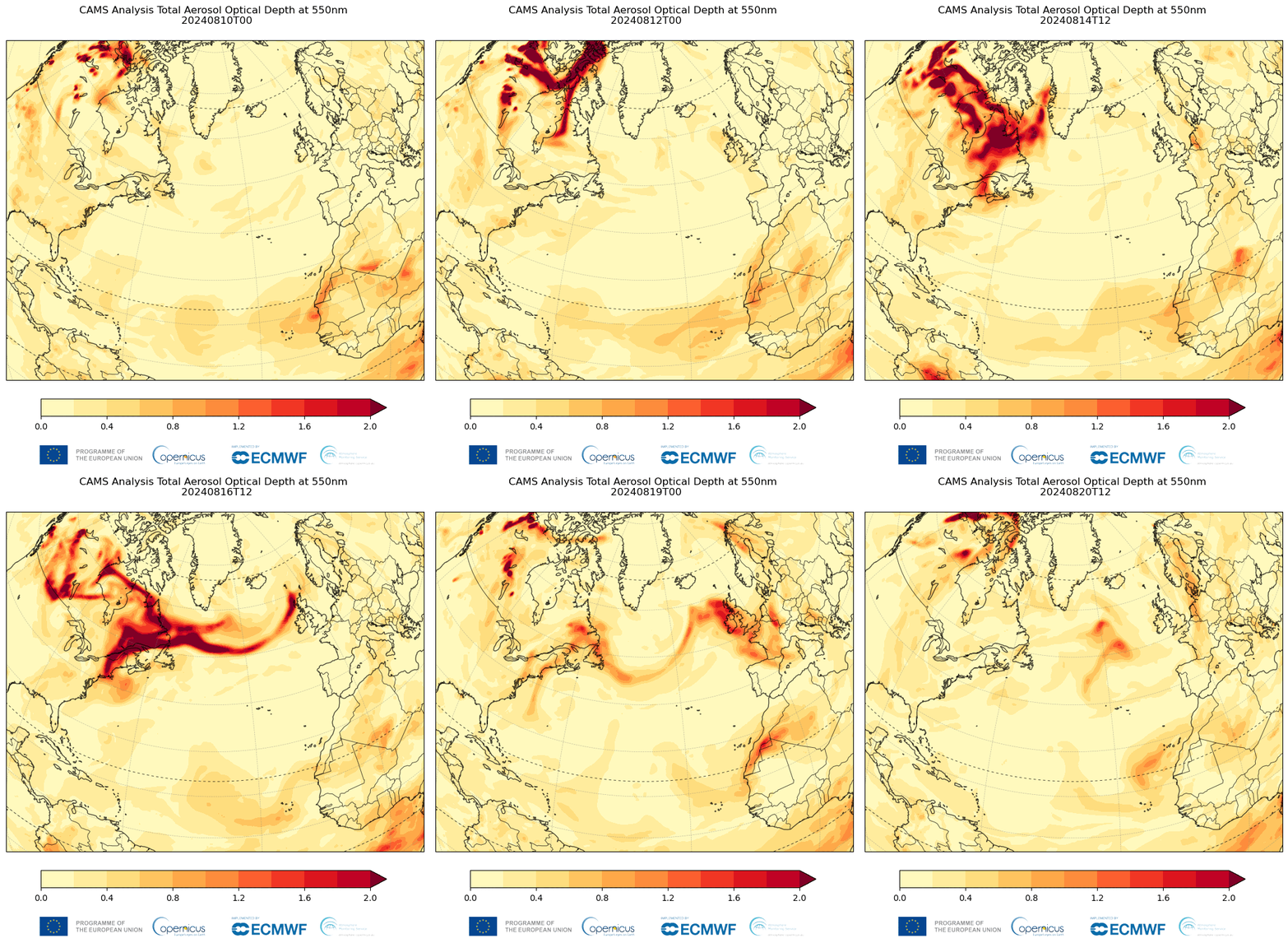
CAMS total aerosol optical depth analysis over the North Atlantic valid for for 10-20 August 2024. (Source: CAMS/ECMWF)
In the USA, the state of California recorded the highest carbon emissions for July, and Oregon recorded the highest June to August total. Despite these intense wildfires, carbon emissions for the USA are, overall, slightly below the 2003-2023 average. Europe experienced a close-to-average wildfire season, with some significant episodes, such as those that occurred in Portugal in September, and North Macedonia, Greece and other parts of Eastern Europe and the Balkans during the summer months.
In the upper ASEAN region, the traditionally high wildfire emissions have kept a reducing trend in the last two decades for most countries. Emissions were generally below average for the 2024 season (January – March) with some exceptions by the end of the season, especially in Myanmar and Laos. Finally, as the Southern Hemisphere summer advances, CAMS is closely monitoring bushfires in Australia.