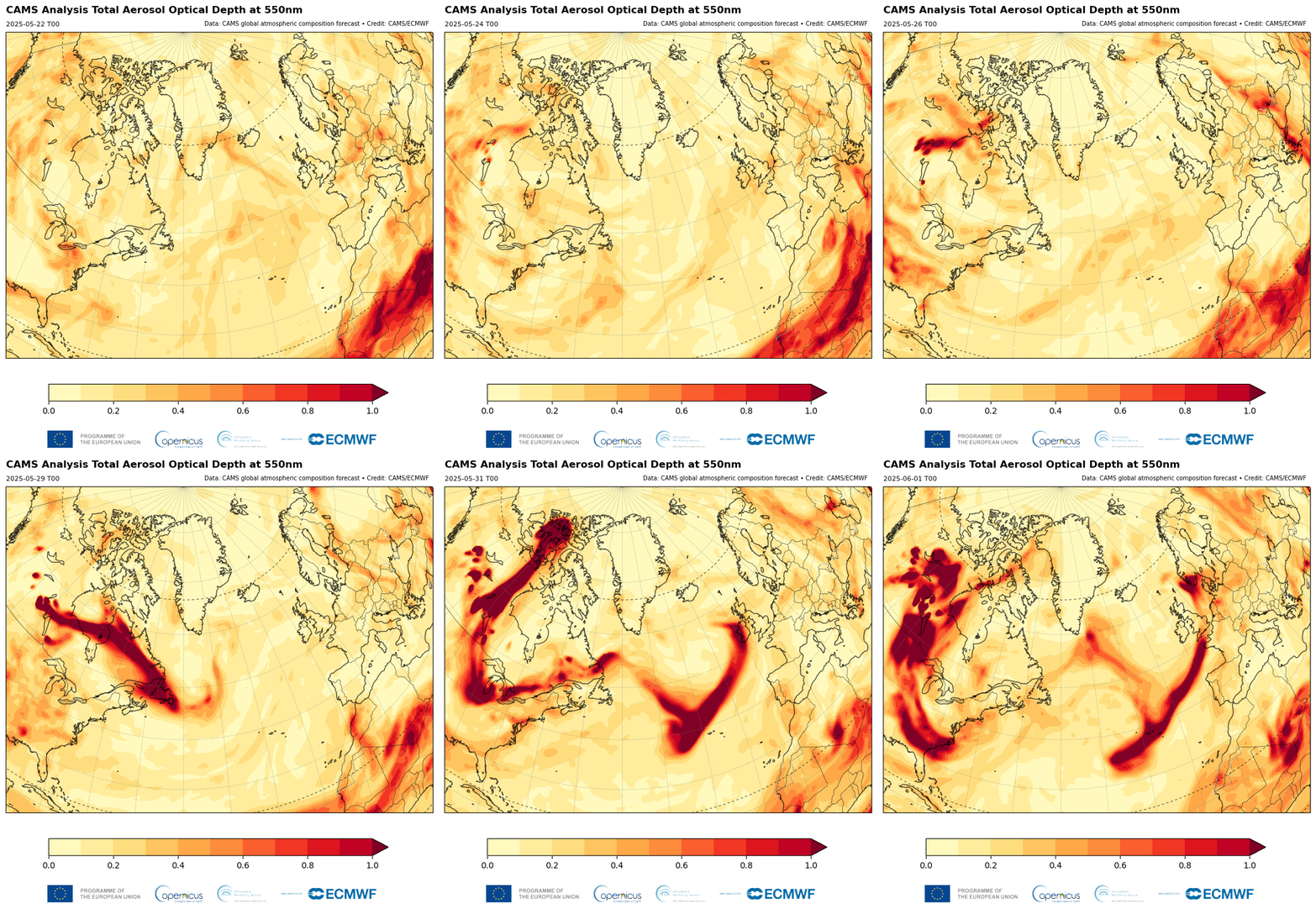
CAMS Total Aerosol Optical Depth at 550nm analyses over the North Atlantic region between 22 May and 2 June 2025. Credit: CAMS/ECMWF.
As boreal summer approaches and the regular wildfire season in Canada has started, theCopernicus Atmosphere Monitoring Service(CAMS) has been monitoring the wildfire emissions and resulting smoke transport. Smoke originating from the wildfires in the Canadian provinces of Manitoba and Saskatchewan has been transported across the Atlantic, reaching Europe during the last few days with forecasts showing further smoke transport this week.
Canada has been experiencing a significant increase in the number and intensity of wildfires throughout May in the Canadian provinces of Saskatchewan, Manitoba and Ontario. The smoke from these wildfires has affected air quality locally. Moreover, several satellites have observed long-range transport across the Atlantic, with smoke reaching as far as Europe. An initial plume at high altitude crossed the Mediterranean region on 18-19 May with reports of the smoke reaching Greece and the Eastern Mediterranean. A second, much larger, smoke plume crossed the Atlantic during the last week of May, reaching northwestern parts of Europe on 1 June. Additional plumes are expected to reach the continent in the upcoming days.
Based on CAMS forecasts, the predicted smoke transport is not expected to have a significant impact on surface air quality, as episodes such as these tend to occur at higher altitudes. Typical effects of these episodes are manifested as more hazy skies with red/orange sunsets.
“Wildfires are a frequent occurrence in boreal forests from spring and through the summer months. Up to the beginning of June, our data is showing that central regions of Canada have experienced a very intense few weeks in terms of wildfire emissions. This data, and the fact that we are able to observe the smoke in Europe, is a reflection of the scale of the fires and impacts they have been having in Manitoba and Saskatchewan. In CAMS we monitor events such as these in order to understand how they affect the atmosphere and air quality regionally and globally.”Mark Parrington, Senior Scientist of the Copernicus Atmosphere Monitoring Service
Additionally, large wildfires have been burning in Russia’s Far Eastern Federal District since the beginning of April, with the most prominent fires occurring in the Republic of Buryatia and Zabaykalsky Krai to the east of Lake Baikal. Carbon emissions in the Far Eastern Federal District since the start of April are at their highest level for the period in question since 2018 at around 35 megatonnes of carbon. CAMS forecasts in mid-May showed large smoke plumes being transported from Zaybaikalsky Krai towards north-eastern China and northern Japan, with some impacts on air quality in the region, and other plumes have been reaching the high Arctic.