Bonn, 19/09/2024
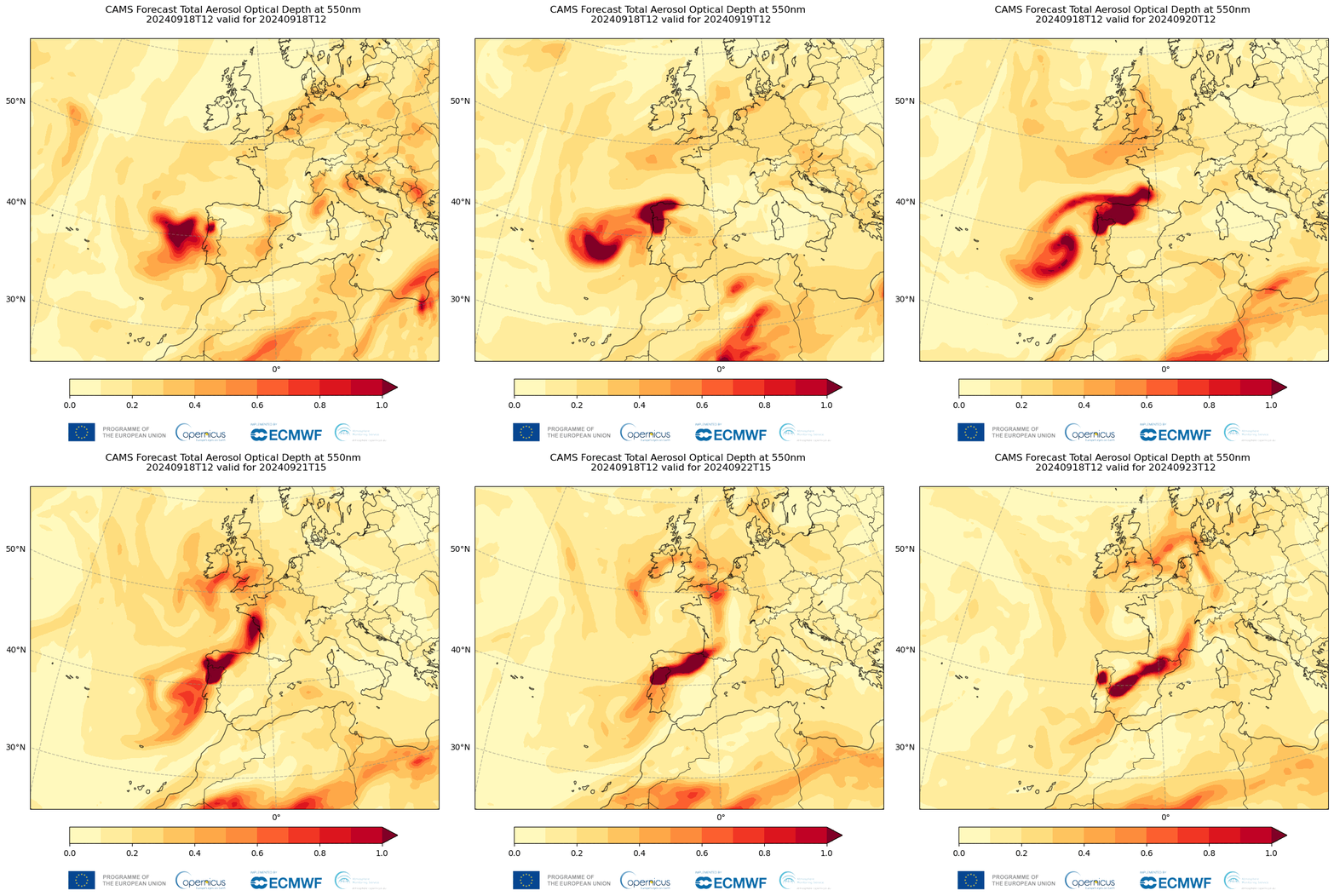
TheCopernicus Atmosphere Monitoring Service (CAMS)estimates that wildfires in Portugal have already released the highest level of carbon emissions forSeptember in the 22 years of the CAMS Global Fire Assimilation System (GFAS) dataset by a large margin. CAMS is closely tracking these wildfire emissions and the resulting long range smoke transport, which is forecast to reach Spain and France over the weekend.
Several wildfires have been affecting northern Portugal since September 14, resulting in the highest September total estimated emissions – including carbon and harmful pollutants as PM10 and PM2.5 – in the 22 years of the CAMS Global Fire Assimilation System (GFAS) dataset. The estimated total carbon emissions, used as an indicator for the strength of the fires, are 1.9 megatonnes of carbon up to 18 September, compared to the previous highest September total for Portugal of approximately 1 megatonne of carbon in 2003. CAMS global and European regional air quality forecasts show that the smoke plumes originating from these wildfires have been moving out towards the Atlantic but are predicted to recirculate across the northern Iberian Peninsula, through the Bay of Biscay towards western France in the coming days. It is important to note that rain forecast for the end of the week may help to extinguish or reduce the number of fires.
A significant degradation in air quality over northern Portugal is expected for the next few days as a result of these wildfires, with forecast concentrations of fine particulate matter PM2.5 in this region remaining relatively high at least until September 25. PM2.5 refers to particulate matter that is 2.5 microns or smaller in diameter, making its potential implications for public health more significant as they can penetrate deep into the respiratory system and potentially enter the bloodstream. In addition to the impacts to air quality, hazy skies could be expected in some regions.
Mark Parrington, Senior Scientist at the Copernicus Atmosphere Monitoring Service, says: “Our data is showing a clear enhancement in the fire emissions and smoke impacts on atmospheric composition and air quality, reflecting the high intensity that rapidly developed with these devastating fires in northern Portugal. The Copernicus Atmosphere Monitoring data, together with the data from the Copernicus Emergency Management Service, help affected countries to assess the impact on the ground and in the air in these very challenging circumstances.”